Introduction: When the Scale Goes Down and the Hair Follows
You started Ozempic — or Wegovy, Mounjaro, or Zepbound — and the weight is finally coming off. The numbers on the scale are dropping, your clothes fit better, and your metabolic health markers are improving. Then you notice it: more hair in your brush. A worrying amount in the shower drain. Thinning at your temples or a widening part line.
You are not imagining it, and you are far from alone. Hair loss has emerged as one of the most discussed — and distressing — side effects among users of GLP-1 receptor agonists (GLP-1 RAs) across social media platforms, patient forums, and dermatology clinics. But here is what most people do not realize: in the vast majority of cases, the hair loss is not a direct toxic effect of the medication on hair follicles. It is almost always telogen effluvium — a temporary, reversible shedding response triggered by the rapid metabolic shift that powerful weight loss imposes on the body.
A 2026 cross-sectional study of GLP-1 RA users in Saudi Arabia found that 70.4% of participants reported hair shedding after starting treatment — a rate roughly ten times higher than the 3–7% reported in the original clinical trials PMID: 41799300. A 2026 systematic review of 24 studies confirmed that semaglutide and tirzepatide demonstrated the highest incidence rates of hair loss across pharmacovigilance databases and clinical cohorts PMID: 41998799.
This article unpacks what the research actually says about GLP-1 medications and hair loss, explains why it happens, and provides evidence-based strategies to prevent, manage, and recover from it — without abandoning a treatment that may be transforming your health.
Why Rapid Weight Loss Causes Hair to Fall Out
To understand GLP-1-associated hair loss, you first need to understand the hair growth cycle and what happens when it is disrupted.
The Hair Cycle: A Quick Primer
Each hair follicle on your scalp cycles through three phases:
- Anagen (growth phase): The active growing period, lasting 2–7 years. At any given time, approximately 85–90% of scalp hairs are in anagen.
- Catagen (transition phase): A brief, 2–3 week transitional period where the follicle shrinks and detaches from the blood supply.
- Telogen (resting/shedding phase): A 3–4 month resting period, after which the hair shaft is shed and a new anagen hair begins to grow. Normally, about 10–15% of hairs are in telogen at any time, and shedding 50–100 hairs per day is considered normal.
Telogen Effluvium: The Body’s Stress Response
Telogen effluvium (TE) occurs when a physiological stressor — and rapid weight loss is a major one — prematurely pushes a large proportion of anagen hairs into the telogen phase simultaneously. Instead of the usual 10–15% of follicles in telogen, that number can jump to 30% or more. The seminal 1993 review by Headington in the Archives of Dermatology described this as a “perturbation of the hair cycle” and identified five distinct functional mechanisms, including “immediate anagen release” — the type most commonly triggered by metabolic stress, fever, surgery, and rapid weight loss PMID: 8447677.
The key feature of telogen effluvium is its timeline: the shedding does not begin immediately after the trigger. Because telogen lasts roughly 3 months, noticeable hair loss typically begins 2–4 months after the inciting event. This is why someone who starts Ozempic in January may not notice increased shedding until March or April — and may mistakenly attribute it to the medication itself rather than the weight loss it produced.
The Bariatric Surgery Analogy
This phenomenon is well documented in the bariatric surgery literature, where patients routinely lose 25–35% of their body weight in the first year — comparable to the weight loss achieved with high-dose GLP-1 RAs. A 2021 review introduced the term “Bar SITE” (Bariatric Surgery-Induced Telogen Effluvium) and documented diffuse hair loss beginning within the first three months postoperatively, with multifactorial causes including rapid weight loss, nutritional deficiencies, and the physiological stress of surgery PMID: 34055500. A 2024 narrative review in Medicina confirmed that bariatric surgery is “associated with telogen effluvium due to weight loss, microelement deficiency, anesthesia, low calorie intake, and low protein intake” PMID: 38399612.
The parallels to GLP-1 medication use are striking: patients achieving 15–20% body weight loss with semaglutide or tirzepatide are imposing a metabolic demand on their bodies that is qualitatively similar to bariatric surgery — just without the surgical trauma. The hair follicle’s response is the same.
Is It the Drug or the Weight Loss? What the Evidence Says
This is the central question, and the research — while still evolving — points toward a nuanced answer.
The Evidence for a Drug-Specific Effect
A 2026 comprehensive review in Dermatology and Therapy examined the pharmacological context for GLP-1 RAs and hair loss. The authors noted that most evidence suggesting a potential association comes from pharmacovigilance database analyses and retrospective cohort studies — not from prospective, controlled trials specifically designed to evaluate hair loss. The signal is strongest for semaglutide and tirzepatide, but the authors emphasized that “causality has not been established” PMID: 42249225.
A 2026 systematic review in Science Progress analyzed 24 studies and found that “semaglutide and tirzepatide demonstrated the highest incidence rates of hair loss.” Importantly, tirzepatide — which produces the greatest magnitude of weight loss among GLP-1 RAs — was most frequently linked to telogen effluvium. Hair loss with semaglutide appeared to be dose-dependent, with doses below 2 mg weekly rarely implicated, while higher obesity-treatment doses were more commonly associated. Females were disproportionately affected PMID: 41998799.
The Case for Weight Loss as the Primary Driver
The strongest argument against a direct drug toxicity mechanism is the dose-dependence on weight loss magnitude. The same cross-sectional study from Saudi Arabia that reported a 70.4% prevalence found that hair shedding was significantly associated with the magnitude of weight loss: 82.7% prevalence among those who lost ≥15% of body weight, compared to just 40% among those who lost <5%. Multivariable analysis confirmed that increasing weight loss was an independent predictor of hair shedding (OR 1.79, 95% CI: 1.19–2.76) PMID: 41799300.
This dose-response relationship — more weight loss, more hair shedding — is exactly what you would expect if the mechanism were telogen effluvium triggered by metabolic stress, not a direct pharmacological effect. A 2026 narrative review in the American Journal of Clinical Dermatology wrestled with this same question, noting that while many studies “have suggested association with telogen effluvium,” prospective controlled studies including immunohistochemical profiling of GLP-1 receptor expression in human hair follicles are still needed to clarify whether there is any direct effect on hair biology PMID: 41957308.
The preponderance of current evidence supports the conclusion that rapid weight loss, not the drug molecule itself, is the primary driver of GLP-1-associated hair loss. This is actually good news: it means the hair loss is almost certainly temporary and reversible.
Nutritional Deficiencies on GLP-1s: The Hidden Contributors
While telogen effluvium from metabolic stress explains the timeline and pattern of hair shedding, nutritional deficiencies create a second, compounding layer of risk that deserves careful attention.
GLP-1 receptor agonists work by suppressing appetite and delaying gastric emptying. The result is a substantial reduction in caloric intake — which, for weight loss, is exactly the point. But when caloric intake drops dramatically, micronutrient intake often drops with it. Patients may meet their weight loss goals while unknowingly falling short on the specific nutrients required for healthy hair growth.
Protein: The Building Block of Hair
Hair is composed almost entirely of a protein called keratin. The hair follicle is one of the most metabolically active tissues in the body, and it requires a steady supply of amino acids to produce new hair shaft. On GLP-1 medications, reduced appetite can easily lead to insufficient protein intake — particularly if patients are not intentionally prioritizing protein at every meal. The recommended minimum for most adults is 0.8 grams per kilogram of body weight per day, but during active weight loss, needs may increase to 1.2–1.6 g/kg to preserve lean body mass and support hair growth.
Iron and Ferritin
Iron deficiency is one of the most well-established nutritional causes of hair loss. Ferritin — the storage form of iron — is particularly important for hair follicle function. A 2026 study of bariatric surgery patients published in Obesity Surgery found that “reduced iron levels were strongly associated with increased hair loss at both 3 and 6 months,” and that “iron deficiency and female sex were the strongest predictors of hair loss” postoperatively PMID: 41894131. For women, who are already at higher risk of iron deficiency due to menstruation, the combination of reduced dietary iron intake on GLP-1s and ongoing losses can quickly deplete ferritin stores.
Zinc
Zinc is essential for DNA synthesis, cell division, and protein synthesis — all processes critical to hair follicle function. A 2024 case-control study of patients with chronic telogen effluvium published in the Journal of Cosmetic Dermatology found that zinc levels were significantly lower in TE patients compared to controls, and that the copper-to-zinc ratio was a significant predictor of TE diagnosis PMID: 39107936. Reduced food intake on GLP-1s, particularly reduced consumption of zinc-rich foods like red meat, shellfish, and legumes, can contribute to insufficiency.
Vitamin D
Vitamin D receptors are expressed in hair follicles, and vitamin D plays a role in hair cycle regulation. Low vitamin D levels have been associated with multiple forms of hair loss, including telogen effluvium. Patients on GLP-1 medications who are eating less overall may have reduced intake of vitamin D-fortified foods and may spend less time outdoors if they experience fatigue as a side effect.
Biotin (Vitamin B7)
Biotin is perhaps the most famous “hair vitamin,” and while true biotin deficiency is rare, the popularity of biotin supplementation among hair loss patients is enormous. The 2024 telogen effluvium study found no difference in serum or urine biotin levels between TE patients and controls, suggesting that biotin deficiency is not a common driver of TE — but also that biotin supplementation is unlikely to help unless a genuine deficiency exists PMID: 39107936.
Prevention Strategies: Protecting Your Hair While Losing Weight
The most effective approach to preventing GLP-1-associated hair loss is to address the root causes: slow the rate of weight loss, optimize nutrition, and support the body through the metabolic transition. Here are the evidence-based strategies:
1. Prioritize Protein at Every Meal
Aim for a minimum of 1.2 grams of protein per kilogram of body weight daily during active weight loss. For a 90 kg (198 lb) person, that means approximately 108 grams of protein per day. Spread protein intake across 3–4 meals to maximize absorption. Practical sources include lean meats, fish, eggs, Greek yogurt, cottage cheese, tofu, edamame, lentils, and quality protein shakes. If appetite suppression makes solid food difficult, liquid protein sources (shakes, bone broth, protein-fortified soups) can bridge the gap.
2. Slow the Rate of Weight Loss
The dose-response relationship between weight loss magnitude and hair shedding is one of the clearest findings in the literature. If you are losing more than 1–2 pounds per week, discuss a slower titration schedule with your prescribing physician. Staying at a lower dose of semaglutide (e.g., 0.5 mg or 1.0 mg weekly) for longer before escalating can produce more gradual weight loss and may reduce the risk of triggering telogen effluvium. The systematic review noted that semaglutide doses below 2 mg weekly were “rarely implicated” in hair loss — a dose higher than what most Ozempic users reach PMID: 41998799.
3. Targeted Micronutrient Supplementation
Based on the nutritional deficiencies most commonly associated with telogen effluvium, consider the following — ideally guided by blood testing:
| Nutrient | Recommended Daily Intake (Adults) | Food Sources |
|---|---|---|
| Iron | 8 mg (men), 18 mg (premenopausal women) | Red meat, spinach, lentils, fortified cereals |
| Zinc | 8 mg (women), 11 mg (men) | Oysters, beef, pumpkin seeds, chickpeas |
| Vitamin D | 600–800 IU (higher if deficient) | Fatty fish, fortified dairy, sun exposure |
| Vitamin B12 | 2.4 mcg | Meat, fish, eggs, dairy, fortified foods |
| Biotin | 30 mcg | Eggs, nuts, seeds, sweet potatoes |
Important: Do not self-supplement iron without checking ferritin levels first. Iron overload (hemochromatosis) is a serious condition, and excess iron supplementation can be harmful. Ask your physician to check a full iron panel (serum iron, ferritin, TIBC) and vitamin D (25-hydroxy vitamin D) before starting supplementation.
4. Monitor Thyroid Function
Telogen effluvium and thyroid-related hair loss can look identical. Significant weight loss can alter thyroid hormone metabolism, and thyroid dysfunction is a common, treatable cause of hair loss. If you are experiencing hair shedding on a GLP-1 medication, a TSH and free T4 level should be part of the initial workup.
Treatment and Recovery: What to Expect
The Timeline of Recovery
If the hair loss is telogen effluvium — and in the vast majority of GLP-1-associated cases, it is — the good news is that it is self-limited. Once the trigger (rapid weight loss) is removed or the body adapts to the new metabolic state, the hair cycle normalizes. The typical timeline:
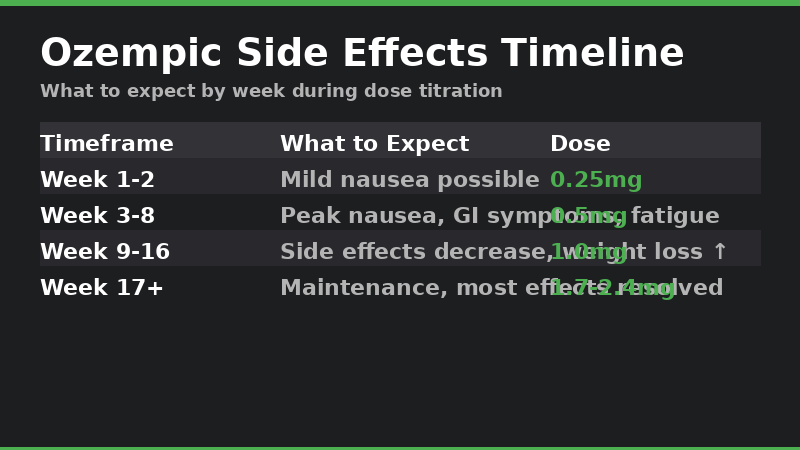
- Months 2–4: Onset of noticeable shedding (triggered by weight loss that began at month 0–1)
- Months 4–6: Peak shedding — this is often the most distressing period
- Months 6–9: Shedding begins to slow as anagen follicles re-enter the growth phase
- Months 9–12: Visible regrowth — short new hairs (“baby hairs”) appear along the hairline and part
Full recovery to baseline hair density typically takes 12–18 months from the onset of shedding. Patience is essential — there is no treatment that can instantaneously reverse telogen effluvium because the hair follicles must physically progress through the telogen phase and re-enter anagen on their own biological schedule.
Topical Minoxidil: The Evidence-Based Option
Minoxidil (Rogaine) is the most well-studied topical treatment for accelerating recovery from telogen effluvium. It works by prolonging the anagen phase and stimulating follicles to transition from telogen to anagen earlier. It is available over the counter in 2% and 5% formulations. For telogen effluvium, minoxidil can shorten the duration of shedding and speed visible regrowth, though it typically takes 3–6 months to see results. The 5% foam formulation is generally preferred for ease of application and reduced scalp irritation.
A critical point: minoxidil can cause an initial “dread shed” during the first 2–6 weeks of use, as resting telogen hairs are pushed out to make way for new anagen growth. This is actually a sign that the medication is working, but it can be alarming. Patients should be counseled about this expected effect before starting treatment.
The Discontinuation Question
The cross-sectional study from Saudi Arabia reported that 39.7% of affected patients cited hair shedding as their reason for discontinuing their GLP-1 medication — a sobering statistic PMID: 41799300. Importantly, 37.7% of those who stopped reported resolution of hair loss after discontinuation. However, stopping the medication also means stopping the weight loss and metabolic benefits — a trade-off that should be weighed carefully.
The 2026 Dermatology and Therapy review recommended that “patients should be informed about the potential risk and monitored for hair loss” rather than reflexively discontinuing treatment PMID: 42249225. Most experts recommend nutritional optimization, slower titration, and supportive measures (minoxidil, scalp care) before considering discontinuation.
When to See a Doctor
While telogen effluvium explains most GLP-1-associated hair loss, it is not the only possibility. You should seek medical evaluation if:
- The pattern is unusual: Telogen effluvium causes diffuse thinning across the entire scalp. If you are experiencing patchy hair loss (discrete bald spots), this could indicate alopecia areata — an autoimmune condition that requires different treatment.
- The hair loss is accompanied by scalp symptoms: Redness, scaling, burning, or scarring of the scalp suggests a different diagnosis (e.g., lichen planopilaris, discoid lupus).
- You have other systemic symptoms: Unexplained fatigue, cold intolerance, weight changes, or heart palpitations alongside hair loss warrant a thyroid evaluation.
- The shedding does not slow after 6 months: Persistent shedding beyond the expected telogen effluvium duration should prompt investigation for ongoing nutritional deficiencies, chronic telogen effluvium, or androgenetic alopecia (female or male pattern baldness) unmasked by the TE episode.
- You have a family history of autoimmune disease: Alopecia areata, lupus, and thyroid disease all have genetic components.
A dermatologist can perform a hair pull test, trichoscopy (dermoscopic examination of the scalp), and if necessary, a scalp biopsy to confirm the diagnosis.
The Bottom Line
Hair loss on Ozempic and other GLP-1 medications is common, distressing, and almost always temporary. The weight of current evidence points to telogen effluvium triggered by rapid weight loss and compounded by nutritional deficiencies as the primary mechanism — not a direct toxic effect of the drug on hair follicles.
The same 2026 systematic review that confirmed the association between GLP-1 RAs and hair loss also emphasized that the “accumulating evidence from pharmacovigilance databases and clinical cohorts suggests an increased risk,” while also calling for “large, prospective randomized trials” to establish causality definitively PMID: 41998799. The dermatology community’s consensus, as articulated in the 2026 Dermatology and Therapy review, is that “clinicians need to be aware of the possibility of hair loss occurring with GLP-1 RAs and patients should be informed about the potential risk and monitored” PMID: 42249225.
For the individual patient, the most important takeaway is this: hair loss on a GLP-1 medication is a sign that your body is undergoing a significant metabolic transition — not that the medication is poisoning your hair follicles. With adequate protein intake, targeted nutritional support, patience with the recovery timeline, and — when appropriate — adjunctive treatments like topical minoxidil, the vast majority of patients will see their hair return to baseline density within 12–18 months.
The decision to continue or discontinue a GLP-1 medication in the face of hair loss is ultimately personal. But for most patients, the answer is not to stop the medication — it is to support the body through the transition, knowing that both the weight loss benefits and the hair will stabilize with time.
References
Piraccini BM, Vañó-Galván S, Blume-Peytavi U, Ribet V, Mengeaud V. Hair Loss in Patients on Glucagon-Like Peptide 1 Receptor Agonists: Understanding Risks and Managing Outcomes. Dermatol Ther (Heidelb). 2026 Jul;16(7):3345-3360. PMID: 42249225
Gupta AK, Teasell EM, Economopoulos V, Mirmirani P. GLP-1 therapies and hair loss: A systematic review of current evidence and implications for counseling. Sci Prog. 2026 Apr-Jun;109(2):368504261444578. PMID: 41998799
Alharbi S, Alkhalifah A. Prevalence and Predictors of Hair Shedding among GLP-1 Receptor Agonist Users: A Cross-Sectional Study from Saudi Arabia. Skin Appendage Disord. 2026 Jan 19. doi: 10.1159/000550540. PMID: 41799300
Headington JT. Telogen effluvium. New concepts and review. Arch Dermatol. 1993 Mar;129(3):356-63. PMID: 8447677
Smolarczyk K, Meczekalski B, Rudnicka E, Suchta K, Szeliga A. Association of Obesity and Bariatric Surgery on Hair Health. Medicina (Kaunas). 2024 Feb 14;60(2):325. PMID: 38399612
Durusu Turkoglu IN, Turkoglu AK, Soylu S, Gencer G, Duman R. A comprehensive investigation of biochemical status in patients with telogen effluvium: Analysis of Hb, ferritin, vitamin B12, vitamin D, thyroid function tests, zinc, copper, biotin, and selenium levels. J Cosmet Dermatol. 2024 Dec;23(12):4277-4284. PMID: 39107936