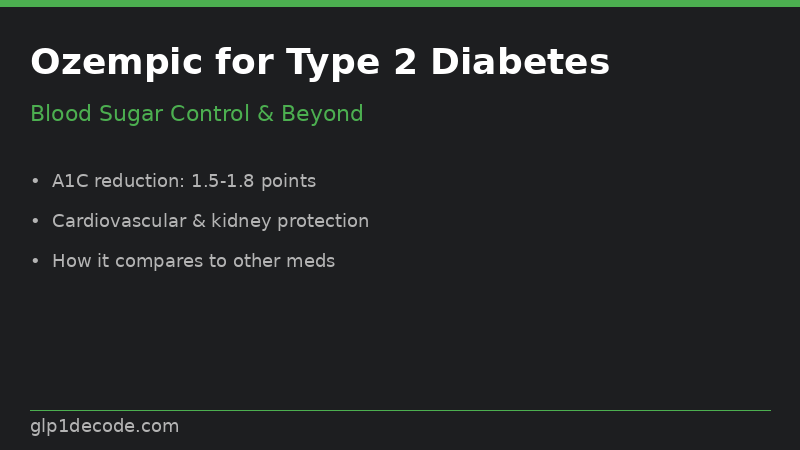
Ozempic’s weight loss effects have dominated headlines, but the drug was developed for a different purpose: treating type 2 diabetes. Before anyone noticed the pounds dropping, researchers were tracking hemoglobin A1C levels , and the results were impressive enough to earn FDA approval in 2017. If you’re considering Ozempic primarily for diabetes, here’s what the data shows.
Medical disclaimer: This article is for informational purposes only and does not constitute medical advice. Always consult your healthcare provider before starting or changing any medication.
Ozempic’s original Purpose: type 2 diabetes treatment
Type 2 diabetes affects roughly 37 million Americans and more than 500 million people worldwide. The core problem is insulin resistance , your body makes insulin but your cells don’t respond to it properly. Over time, the pancreas struggles to keep up, blood sugar rises, and complications develop in the eyes, kidneys, nerves, and blood vessels.
Ozempic addresses this through the GLP-1 pathway, which is actually underactive in many people with type 2 diabetes. GLP-1 is a hormone your gut releases after eating. It tells your pancreas to release insulin, signals your liver to stop dumping glucose, and slows stomach emptying so sugar enters your bloodstream more gradually. Semaglutide mimics and amplifies this natural signal — but with one key advantage: it resists the enzyme that normally breaks down natural GLP-1 within minutes, so it sticks around for days instead of minutes. By directly targeting semaglutide insulin resistance, it tackles the root cause of type 2 diabetes rather than just managing symptoms.
How Ozempic lowers blood sugar
Semaglutide lowers blood sugar through three coordinated actions. First, it stimulates insulin release from the pancreas , but only when blood sugar is actually elevated, which means it carries a low risk of causing hypoglycemia on its own. This glucose-dependent mechanism is a major safety advantage over older diabetes drugs like sulfonylureas, which stimulate insulin release regardless of blood sugar levels.
Second, it suppresses glucagon, the hormone that tells your liver to release stored glucose. In type 2 diabetes, glucagon levels are often inappropriately high, causing the liver to pump out sugar even when blood levels are already elevated. Semaglutide turns down this spigot.
Third, it slows gastric emptying. Food stays in your stomach longer, which means sugar from meals enters your bloodstream more gradually. This blunts the post-meal blood sugar spikes that contribute to A1C elevation.
A1C Reduction: what the clinical trials show
The SUSTAIN clinical trial program tested semaglutide across a range of doses and patient populations. The headline numbers are clear: semaglutide 1.0mg reduced A1C by 1.5 to 1.8 percentage points on average , among the largest reductions seen with any non-insulin diabetes medication PMID: 27633186.
A 2026 post-hoc analysis of the SUSTAIN and PIONEER trials looked specifically at young adults with type 2 diabetes , a group that often struggles with medication adherence and glucose control. Semaglutide treatment produced meaningful A1C reductions in this population, with results comparable to what was seen in older adults PMID: 41994903.
Real-world data from a 2025 study examining predictive factors for semaglutide response found that adherence , simply taking the medication consistently , was the strongest predictor of A1C improvement PMID: 41036135. People who stuck with weekly injections saw A1C drops averaging 1.6 points, while inconsistent use produced much smaller effects.
Beyond blood Sugar: cardiovascular and kidney benefits
The real story of Ozempic in diabetes goes beyond A1C. The SUSTAIN-6 trial found a 26% reduction in major cardiovascular events , heart attack, stroke, and cardiovascular death , in people with type 2 diabetes taking semaglutide compared to placebo PMID: 27633186.
This cardiovascular protection appears to be independent of blood sugar lowering. People in the trial saw event reductions even when their A1C improvements were modest, suggesting that semaglutide protects the heart and blood vessels through mechanisms beyond glucose control , likely including reduced inflammation, lower blood pressure, and improved endothelial function.
The SELECT trial extended these findings to people without diabetes, showing that semaglutide 2.4mg reduced cardiovascular events by 20% in people with obesity and established cardiovascular disease PMID: 37952131. Together, these trials establish semaglutide as a cardiovascular medication, not just a metabolic one.
Ozempic vs other diabetes medications
In the field of type 2 diabetes treatments, Ozempic sits near the top of the efficacy ladder. The STEP 2 trial, which tested semaglutide 2.4mg specifically in people with type 2 diabetes and obesity, found A1C reductions of roughly 2.0 percentage points , substantially more than what’s typically achieved with metformin alone PMID: 33567185.
How it compares to alternatives: metformin reduces A1C by about 1.0-1.5 points but offers no weight loss. SGLT2 inhibitors like empagliflozin reduce A1C by 0.5-0.8 points with modest weight loss and strong kidney protection. DPP-4 inhibitors like sitagliptin are weaker on A1C (0.5-0.7 points) and weight-neutral. Insulin is the most potent glucose-lowering option but causes weight gain and requires careful dosing to avoid hypoglycemia.
Ozempic combines potent A1C reduction with substantial weight loss and cardiovascular protection , a combination no other single diabetes medication offers. The trade-off is cost (brand-name only, no generic available) and the injectable delivery route.
Starting Ozempic for Diabetes: what to expect
If your doctor prescribes Ozempic for type 2 diabetes, you’ll start at 0.25mg weekly for four weeks, then increase to 0.5mg. Many people see meaningful blood sugar improvements at 0.5mg. If your A1C remains above target, your doctor may increase to 1.0mg , the dose used in most of the SUSTAIN trials , and potentially to 2.0mg if needed.
The gastrointestinal side effects (nausea, diarrhea, constipation) are most prominent during the first 4-8 weeks and typically improve as your body adapts. Eating smaller meals, avoiding greasy foods, and staying hydrated all help during this adjustment period.
Blood sugar often improves before weight changes become visible. Many people see their fasting glucose drop within the first two weeks, even if the scale hasn’t moved much. This early glucose response is a good sign that the medication is working.
For people with type 2 diabetes, Ozempic represents a genuine advance , a weekly injection that lowers blood sugar, protects the heart and kidneys, and helps with weight loss. It’s not the right choice for everyone, but for those who tolerate it and can access it, the data supports using it early and consistently.
References
- Marso SP, et al. Semaglutide and Cardiovascular Outcomes in Patients with Type 2 Diabetes. N Engl J Med. 2016. PMID: 27633186
- Semaglutide treatment in young adults with type 2 diabetes: post hoc SUSTAIN and PIONEER analysis. Diabetes Obes Metab. 2026. PMID: 41994903
- Predictive factors for HbA1c and weight loss with semaglutide in type 2 diabetes. Front Endocrinol. 2025. PMID: 41036135
- Wilding JPH, et al. Once-Weekly Semaglutide in Adults with Overweight or Obesity. N Engl J Med. 2021. PMID: 33567185
- Lincoff AM, et al. Semaglutide and Cardiovascular Outcomes in Obesity without Diabetes. N Engl J Med. 2023. PMID: 37952131