Introduction
Medical disclaimer: This article is for informational purposes only. It does not replace professional medical advice. Talk to your doctor before making any changes to your medication or alcohol use.
One of the questions I hear most from patients starting Ozempic is: “Can I still have a drink?” It is a fair question. Social drinking is woven into how many of us celebrate, unwind, and connect. The idea of giving it up completely feels like yet another thing this medication takes away.
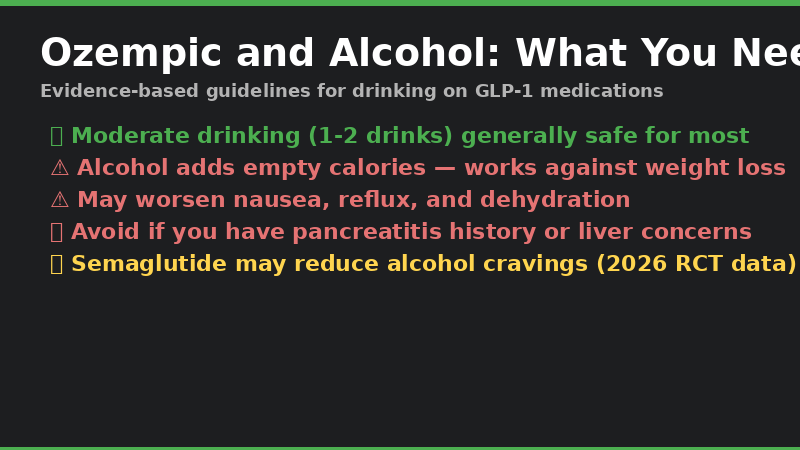
The short answer is that there is no official contraindication. The FDA label for semaglutide does not list alcohol as a forbidden substance. But the real answer is more interesting than a simple yes or no. New research has changed what we know about how GLP-1 medications interact with alcohol in the brain. A landmark trial published in May 2026 in The Lancet showed that semaglutide produced real reductions in heavy drinking among people with alcohol use disorder and obesity PMID: 42070571. That changes the conversation.
What follows is everything the current evidence tells us about drinking on Ozempic. I will walk through what happens when alcohol and semaglutide meet in your body, how drinking affects your weight loss progress, which side effects get worse when the two mix, and practical guidelines for the occasions when you do choose to drink.
How glp-1s and alcohol interact
To understand the interaction, you need to know that GLP-1 receptors are not just in your gut and pancreas. They live in your brain too, in regions that control reward and motivation. The same dopamine pathways that make food rewarding also light up in response to alcohol.
Semaglutide dampens that reward signal. It does not just make you eat less. It makes food less captivating. And evidence now shows it does something similar with alcohol.
In 2023, researchers at the University of Gothenburg found that semaglutide reduced alcohol intake and relapse-like drinking in both male and female rats. The same lab showed the drug prevents alcohol from activating the mesolimbic dopamine system, the brain’s core reward circuit. A separate 2023 study in JCI Insight found that semaglutide reduced alcohol drinking in rodents by modulating GABA neurotransmission, a different mechanism from how it affects appetite.
Then came the human trials. In February 2025, Hendershot and colleagues published a randomized trial in JAMA Psychiatry showing that even low-dose semaglutide (titrated to just 0.5 mg per week) reduced the amount of alcohol people consumed in a laboratory setting and cut weekly alcohol craving scores PMID: 39937469. The effect sizes were medium to large.
The big one arrived in 2026. Klausen and colleagues at Copenhagen University Hospital ran a 26-week randomized, double-blind, placebo-controlled trial of semaglutide 2.4 mg weekly in 108 people with moderate to severe alcohol use disorder and obesity. The semaglutide group cut their heavy drinking days by 41 percentage points from baseline. The placebo group managed 26 percentage points. The difference was 14 points, and it was statistically significant (p=0.0015). Secondary outcomes on craving, alcohol consumption, and metabolic markers all pointed the same direction PMID: 42070571.
A 2024 study in Nature Communications using real-world data from over 80,000 patients found that people prescribed semaglutide for obesity had a 50 to 56 percent lower risk of developing or having a recurrence of alcohol use disorder compared to those on other weight loss medications PMID: 38806481.
What all this means for the average person taking Ozempic is not that you should never drink. It means your relationship with alcohol may shift. Many people on GLP-1s report that alcohol simply stops being appealing. A glass of wine they used to look forward to now sits half-finished. The taste changes. The buzz feels different, or never arrives. This is not a side effect in the traditional sense. It is the medication doing what it does in reward centers that happen to respond to both food and ethanol.
Does alcohol affect weight loss on ozempic?
This is where the practical implications get clear. Alcohol is caloric. A standard glass of wine has about 120 to 130 calories. A pint of craft IPA can run 200 to 250. Three drinks on a Saturday night adds 400 to 700 calories to your day, and those calories carry zero nutritional value. They also lower your inhibitions around food. Anyone who has ever ordered late-night pizza after a few beers understands this dynamic.
If you are taking Ozempic for weight loss, alcohol works against you in three ways. First, the calories themselves. Semaglutide helps you maintain a caloric deficit, and liquid calories undermine that deficit directly. Second, alcohol impairs judgment about eating. The medication might have you feeling full and disinterested in food, but after two drinks, the signals get crossed. Third, your body prioritizes metabolizing alcohol over fat. While your liver is busy breaking down ethanol, fat burning pauses.
A 2026 review in the International Journal of Molecular Sciences noted that GLP-1 receptor agonists reduce alcohol-seeking behaviors and relapse drinking across both preclinical and clinical studies, and that the effect appears consistent across different GLP-1 medications including semaglutide, liraglutide, and dulaglutide PMID: 42196481.
So the relationship is complicated. Ozempic may make you want to drink less, which helps weight loss. But when you do drink, those calories still count, and they arrive with additional metabolic baggage. I tell patients that if they are seeing steady weight loss and having an occasional drink, the numbers probably work out fine. If weight loss has stalled, alcohol is one of the first things worth cutting, at least temporarily, to see what happens.
Side effect interactions
The real concern I have about drinking on Ozempic is not about the brain science. It is about how alcohol amplifies the side effects people already struggle with.
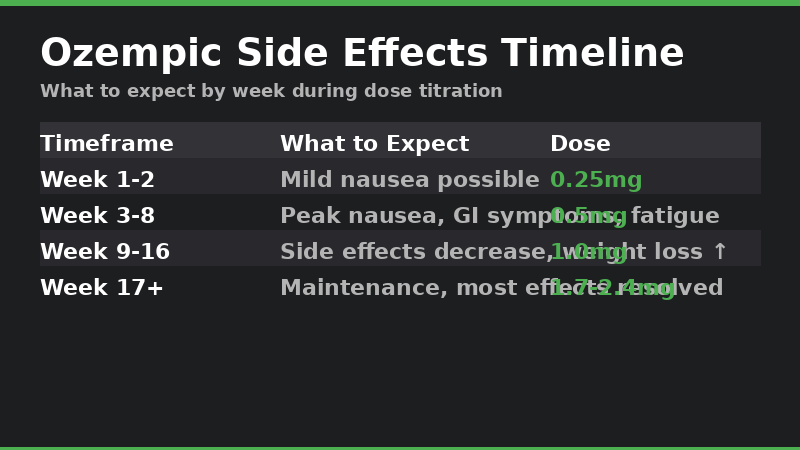
Nausea is the most common side effect of semaglutide, affecting roughly 20 percent of users in clinical trials. Alcohol irritates the stomach lining. Put the two together on a dose escalation day, and you are asking for trouble. I have heard from patients who had one glass of wine on week two of the 0.5 mg dose and spent the next six hours regretting it.
Dehydration is another underappreciated problem. Ozempic reduces appetite and thirst cues. Many people on this medication do not drink enough water to begin with. Alcohol is a diuretic. The combination of medication-related low fluid intake plus alcohol-induced water loss can leave you dehydrated, which makes nausea worse, causes headaches, and contributes to the fatigue and “brain fog” some Ozempic users describe.
Hypoglycemia risk deserves specific attention. Semaglutide by itself rarely causes low blood sugar because it only stimulates insulin release when glucose is elevated. But alcohol changes the math. Your liver normally produces glucose between meals to keep blood sugar stable. When you drink, the liver shifts its attention to metabolizing ethanol and produces less glucose. If you are also taking a sulfonylurea like glimepiride or using insulin, alcohol can tip you into hypoglycemia, sometimes hours after you stop drinking. The symptoms of low blood sugar (confusion, dizziness, shakiness) can look like intoxication, which means the people around you might not realize you need help.
Gastrointestinal side effects like diarrhea, bloating, and acid reflux are common during the first few months on Ozempic. Alcohol makes every one of these worse. Beer and wine are particularly rough on acid reflux. Carbonated mixed drinks introduce gas into an already sluggish stomach. If you are still in the early weeks of adjusting to the medication, drinking is a gamble you probably lose.
Can alcohol worsen Ozempic side effects?
The short answer is yes, and not just the GI symptoms. Let me talk about pancreatitis, because this is the one that scares people.
The FDA prescribing information for Ozempic carries a warning about pancreatitis. In clinical trials, a small number of patients developed acute pancreatitis while taking semaglutide. Heavy alcohol use is itself a major cause of pancreatitis. When someone on a GLP-1 medication drinks heavily, they are stacking two independent risk factors for the same serious condition.
A 2026 review in the European Journal of Gastroenterology and Hepatology examined semaglutide’s potential role in metabolic dysfunction-associated alcohol-related liver disease and described it as a dual-target therapy, meaning the drug may help both the metabolic and alcohol-related components of liver disease PMID: 42214023. But the same paper emphasized that heavy drinking while on GLP-1 therapy remains risky because of overlapping organ stress.
The FDA has also received post-marketing reports of acute gallbladder disease in patients taking semaglutide. Alcohol consumption and rapid weight loss are both associated with gallstone formation. If you are losing weight quickly on Ozempic, your gallbladder is already working harder. Adding alcohol to the picture raises the odds of problems.
There is also the issue of slowed gastric emptying. Semaglutide keeps food in your stomach longer. This is part of how it creates lasting fullness. Alcohol irritates the stomach lining and, in high amounts, can trigger vomiting. When your stomach empties slowly, alcohol sits there longer, prolonging the irritation. If you do get sick, the delayed emptying means your stomach contents spend more time doing damage on the way out.
Guidelines for drinking on Ozempic
I do not believe in telling people they can never drink again. That approach backfires. People skip the warning and then feel guilty when they have a beer at a barbecue. So here are practical guidelines that acknowledge reality while keeping you safe.
Wait until you know how the medication affects you. Do not drink during the first month, and definitely not on dose escalation days. Your body needs time to adjust to the GI effects of semaglutide without alcohol adding another variable.
Start with half of what you used to drink. Many people find their tolerance drops on Ozempic. A drink that used to feel mild now produces noticeable effects. Take it slow. Pay attention to how you feel after one drink before considering a second.
Eat something first. Drinking on an empty stomach is always bad advice, but on Ozempic it is worse. Food in your stomach buffers the alcohol and reduces irritation. Since the medication already slows gastric emptying, having a meal onboard provides some protection.
Water between every drink. This is standard drinking advice, but it matters more when you are on a medication that blunts thirst. For every alcoholic drink, have a full glass of water. It helps with both the dehydration and the hangover.
Avoid sugary mixers. Cocktails made with juice, soda, or simple syrup pack a double caloric punch. They also spike blood sugar, which is counterproductive if you are taking Ozempic for type 2 diabetes. Dry wine, spirits with soda water, or light beer are better choices.
Watch for hypoglycemia if you take insulin or sulfonylureas. Check your blood sugar before bed if you have been drinking. The delayed hypoglycemia risk from alcohol combined with insulin or sulfonylureas is real and dangerous. Have a small snack before sleeping.
Skip the drinking if you have a history of pancreatitis. This is non-negotiable. If your medical record includes acute pancreatitis from any cause, alcohol is simply not worth the risk while you are on Ozempic.
Tell your doctor. Be honest about your alcohol intake. Your prescribing physician needs the full picture to assess your pancreatitis risk, monitor your liver enzymes, and adjust other medications that interact with alcohol.
What about special occasions?
I get this question a lot. “What about my wedding?” “What about New Year’s Eve?” “What about the vacation I planned six months ago?”
Life happens. The goal is not perfection. If you have been on Ozempic for a few months, your side effects are stable, and your doctor has not flagged any concerns, having a drink or two at a special event is probably fine. But I suggest a few precautions.
Plan to eat protein and fat before you drink. Something like chicken, eggs, or yogurt coats the stomach better than carbs alone. Avoid carbonation entirely on celebration days. Champagne and beer bubbles plus slow gastric emptying is a recipe for bloating and reflux. Stick to still white wine or a spirit with flat water.
If you are early in treatment and have an unavoidable event, talk to your doctor about timing your dose around it. Some people find that injecting the day after an event, rather than the day before, reduces the overlap between peak medication effects and alcohol consumption.
A 2026 review on GLP-1 receptor agonists in substance use disorders noted that the emerging evidence positions these medications as potential treatments for alcohol use disorder, but that more data is needed before making firm clinical recommendations PMID: 42219586. What this tells me is that the science is moving fast, but we do not yet have formal guidelines. In the meantime, common sense prevails. Know your body. Respect your limits. And if you find that Ozempic has made drinking less enjoyable, see that as a feature rather than a bug.
Summary
Ozempic and alcohol interact in ways that go beyond simple drug metabolism. The medication changes how your brain responds to alcohol’s rewarding effects. For many people, this means drinking less without trying, or losing interest in alcohol entirely. The 2026 Klausen trial proved that semaglutide at 2.4 mg reduces heavy drinking days in people with alcohol use disorder, confirming what earlier human and animal studies had suggested PMID: 42070571.
But the practical concerns remain. Alcohol worsens nausea, raises dehydration risk, can cause hypoglycemia when combined with other diabetes medications, and adds empty calories that slow weight loss. The pancreatitis and gallbladder risks are serious enough that anyone with a relevant history should avoid alcohol while on semaglutide.
If you drink occasionally and are otherwise healthy, a glass of wine with dinner a few times a month is unlikely to cause problems once you have adjusted to the medication. If you drink heavily or daily, the conversation is different. You need to talk to your doctor honestly about your intake. The same medication you take for weight loss or diabetes is now being studied as a treatment for alcohol use disorder itself, which means it could be doing something useful for your drinking patterns rather than competing with them.
The bottom line: Ozempic does not forbid alcohol, but it changes the equation. Listen to your body. When it tells you that the second drink does not feel right, pay attention. That is the medication doing its job in parts of your brain you did not expect it to reach.
References
Klausen MK, Justesen SK, Pedersen JN, et al. Once-weekly semaglutide versus placebo in patients with alcohol use disorder and comorbid obesity: a randomised, double-blind, placebo-controlled trial. Lancet. 2026;407(10540):1687-1698. PMID: 42070571
Hendershot CS, Bremmer MP, Paladino MB, et al. Once-Weekly Semaglutide in Adults With Alcohol Use Disorder: A Randomized Clinical Trial. JAMA Psychiatry. 2025;82(4):395-405. PMID: 39937469
Wang W, Volkow ND, Berger NA, Davis PB, Kaelber DC, Xu R. Associations of semaglutide with incidence and recurrence of alcohol use disorder in real-world population. Nat Commun. 2024;15(1):4548. PMID: 38806481
Zawilska JB, Zwierzyńska E, Wojcieszak J. Searching for New Pharmacological Treatments of Alcohol Use Disorder (AUD): Focus on GLP-1 Receptor Agonists. Int J Mol Sci. 2026;27(10):4502. PMID: 42196481
[Semaglutide in metabolic dysfunction-associated alcohol-related liver disease: a potential dual-target therapy for metabolic dysfunction and alcohol use.] Eur J Gastroenterol Hepatol. 2026;38(7). PMID: 42214023
[GLP-1 RAs in Substance Use Disorders: Emerging Evidence and Future Directions.] Cardiol Rev. 2026. PMID: 42219586