Introduction
Medical Disclaimer: This article is for informational purposes only and does not constitute medical advice. Consult your healthcare provider before making changes to your diet, medication, or supplement regimen.
Starting Ozempic, Wegovy, or Mounjaro isn’t just about taking a weekly injection — it’s about fundamentally changing your relationship with food. The medication helps, but what you eat determines whether you thrive or just survive on GLP-1 therapy.
This diet guide is based on clinical nutrition research, GLP-1 pharmacology, and insights from obesity medicine specialists. It’s designed to help you:
- Minimize gastrointestinal side effects
- Preserve muscle mass during rapid weight loss
- Get adequate nutrition despite reduced appetite
- Build sustainable eating habits for long-term success
The GLP-1 Diet Principles
1. Protein First — Always
When your appetite is suppressed, every bite counts. Protein should be the foundation of every meal.
Why it matters on GLP-1s:
- Preserves muscle mass during rapid weight loss (up to 25-40% of lost weight can be lean mass without adequate protein)
- Highest satiety per calorie — keeps you full longer
- Requires more energy to digest (higher thermic effect)
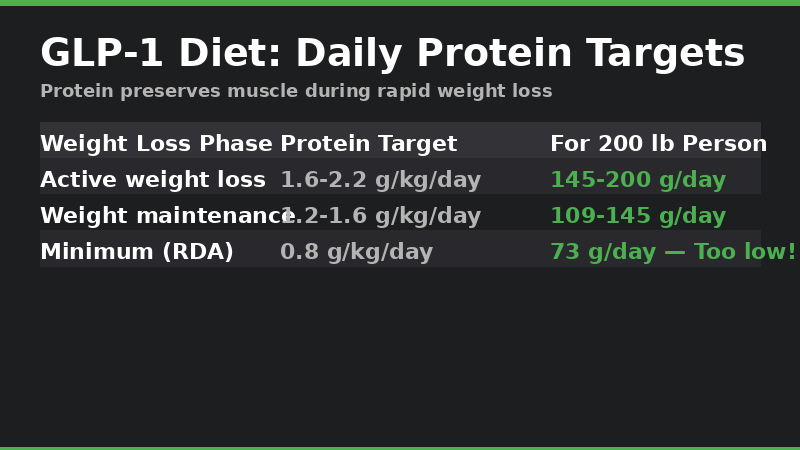
Target: 1.2-1.6g of protein per kilogram of body weight daily. For a 200-pound person, that’s 109-145 grams.
Good sources:
- Greek yogurt (15-20g per cup)
- Chicken breast (31g per 4oz)
- Salmon (22g per 4oz + omega-3s)
- Whey or plant protein shakes (20-30g per serving)
- Eggs (6g each)
- Cottage cheese (25g per cup)
- Lentils and beans (18g per cup cooked)
2. Hydration Is Non-Negotiable
GLP-1 medications reduce thirst signals alongside hunger signals. Many patients become chronically dehydrated without realizing it.
Consequences of dehydration on GLP-1s:
- Worsened nausea and constipation
- Fatigue and headaches
- Kidney stress
- Reduced weight loss (dehydration mimics hunger)
Target: 2-3 liters (64-96 oz) of water daily, more if exercising or in hot weather.
Practical tip: Get a 32oz water bottle and make sure you finish it 2-3 times per day. Add electrolyte packets (sugar-free) if you’re sweating heavily or experiencing diarrhea.
3. Fiber: The Double-Edged Sword
Fiber is essential for gut health and satiety — but on GLP-1s, too much too fast can cause severe bloating and discomfort due to slowed gastric emptying.
Strategy:
- Start with 15-20g daily and increase gradually
- Target 25-30g daily long-term
- Pair fiber with adequate water (fiber without water = constipation)
- Soluble fiber (oats, apples, psyllium) is gentler than insoluble fiber during adjustment
Foods to Prioritize
| Food Group | Best Choices | Why |
|---|---|---|
| Protein | Chicken breast, turkey, fish, eggs, Greek yogurt, tofu, protein powder | Preserves muscle, high satiety |
| Vegetables | Leafy greens, cucumbers, zucchini, bell peppers, carrots (cooked) | Nutrients, fiber, low calorie |
| Fruits | Berries, apples, pears, citrus | Fiber, antioxidants, natural sweetness |
| Whole Grains | Oats, quinoa, brown rice, whole wheat bread | Sustained energy, B vitamins |
| Healthy Fats | Avocado, olive oil, nuts, seeds | Hormone health, fat-soluble vitamins |
| Dairy/Alt | Greek yogurt, kefir, cottage cheese | Protein + probiotics |
Foods to Avoid or Minimize
| Food | Why to Avoid |
|---|---|
| Fried and greasy foods | Worsens nausea, slow gastric emptying makes digestion painful |
| High-sugar foods | Can cause reactive hypoglycemia, empty calories |
| Large meals | Increased nausea, vomiting risk |
| Carbonated beverages | Gas + slow stomach emptying = severe bloating |
| Alcohol | Empty calories, can worsen GI side effects, dehydration |
| Very spicy foods | May trigger nausea and acid reflux |
| Raw cruciferous veg (large amounts) | Bloating (broccoli, cauliflower, cabbage) |
Sample 7-Day GLP-1 Meal Plan
Day 1 (1500-1600 calories, 120g protein)
| Meal | Food | Protein |
|---|---|---|
| Breakfast (8am) | Greek yogurt (1 cup) + berries + 1 tbsp chia seeds | 20g |
| Snack (10:30am) | Hard-boiled egg + small apple | 6g |
| Lunch (1pm) | Grilled chicken salad (4oz chicken, mixed greens, cucumber, olive oil vinaigrette) | 35g |
| Snack (4pm) | Protein shake (1 scoop whey + water/almond milk) | 25g |
| Dinner (7pm) | Baked salmon (4oz) + steamed asparagus + 1/2 cup quinoa | 30g |
| Total Protein | 116g |
Day 2-7 (Follow Similar Pattern)
The key is consistency: protein at every meal, vegetables for fiber and nutrients, and small, frequent meals to work with (not against) the slowed gastric emptying.
Managing Eating on Injection Day
Many patients find injection day the hardest for eating. Here’s what works:
- Inject in the evening — sleep through the initial wave of appetite suppression
- Eat lightly on injection day — soup, smoothies, yogurt-based meals
- Avoid injection before a big meal — you’ll regret it
- Day after injection: This is often when appetite suppression peaks. Keep protein shakes and easy-to-eat foods available.
Common Questions
“Can I drink coffee on Ozempic?”
Yes, but with caution. Coffee can worsen acid reflux and may irritate an already-sensitive stomach. If you drink it, go easy on cream and sugar — liquid calories add up fast.
“What about intermittent fasting?”
Intermittent fasting can work well with GLP-1s for some people — the appetite suppression makes fasting windows easier. However, getting adequate protein in a shorter eating window is challenging. If you try IF, track your protein intake carefully.
“Will I need to eat like this forever?”
The strictest version of this diet is for the active weight loss phase. Once you reach maintenance, you’ll have more flexibility. However, the fundamental principles — protein first, stay hydrated, avoid ultra-processed foods — apply for life.
Special Considerations
For Vegetarians and Vegans
- Protein sources: Tofu, tempeh, seitan, legumes, plant protein powders
- Challenge: Getting 1.2-1.6g/kg without animal protein requires planning
- Supplement consideration: B12, iron, and zinc are worth monitoring
For People with Diabetes
- Monitor blood sugar closely, especially in the first weeks
- Work with your doctor to adjust diabetes medications as needed
- The combination of GLP-1 + very low carb diet can cause hypoglycemia if you’re on insulin or sulfonylureas
The Bottom Line
The GLP-1 diet isn’t a fad — it’s a strategic approach to eating that complements the medication’s effects while protecting your health. The core principles are simple:
- Protein at every meal (1.2-1.6g/kg daily)
- Hydration (2-3L water daily)
- Small, frequent meals (work with slow stomach emptying, not against it)
- Avoid fried, greasy, and ultra-sweet foods
- Fiber — increase gradually
Follow these principles, and you’ll not only lose weight — you’ll feel better, preserve muscle, and build habits that last long after you reach your goal weight.
References
- Wilding JPH, et al. “Once-Weekly Semaglutide in Adults with Overweight or Obesity.” New England Journal of Medicine. 2021. PMID: 33567185
- Wharton S, et al. “Gastrointestinal tolerability of once-weekly semaglutide 2.4 mg in adults with overweight or obesity.” Diabetes, Obesity and Metabolism. 2022. PMID: 34514682
- Almandoz JP, et al. “Dietary intake by patients taking GLP-1 and dual GIP/GLP-1 receptor agonists: A narrative review.” Obesity Pillars. 2024. PMID: 39175746
Last reviewed: June 14, 2026